I know this has nothing to do with my blog, but I really wanted to let you guys know about an awesome new website a friend of mine made. It's called GreetSheet and it makes social networking so much easier.
Now that Megaupload is dead, the Motion Picture Association of America (MPAA) is looking for a new site to take down. They set their eyes on Hotfile, another file-sharing site that they believe is just as bad, if not worse, than Megaupload. Like Megaupload, Hotfile allows users to upload any data they want, which can then be downloaded by anyone. Unlike most site-sharing sites, Hotfile pays its users to upload certain kinds of content, including copyrighted files. This upsets many different movie studios, including Disney, 20th Century Fox, Warner Bros, and Universal, all of whom want Hotfile shut down.
The MPAA's biggest argument is that since Megaupload and Hotfile are so similar, Hotfile should also be taken down. The studios were quoted saying, "Hotfile's business model is indistinguishable from that of the website MEgaupload, which recently was indicted criminally for engaging in the very same conduct as Hotfile". The studios are also arguing that Hotfile does not comply with Digital Millenium Copyright Act (DMCA). The site failed to keep track of it's infringing users, nor did it take down any infringing data, even after many notices were sent to take it down.
Hotfile fought back saying that it is a DMCA agent, and provides a removal form for any infringing content. The case against Hotfile has been open since February, 2011. I hate to say it but since the MPAA had no problem getting Megaupload shutdown, I think Hotfile will soon be joining Megaupload in prison.
If you would like to read the summary the MPAA made against Hotfile, click this link:
When SOPA and PIPA first started becoming big, major websites and domain companies began taking sides in the battle against Internet censoring. Some of the largest sites on the Internet, including Google, Wikipedia, and Reddit, were completely against SOPA. Go Daddy, a domain name registrar, went in the opposite direction, and immediately suffered the consequences.
On December 22, 2011, Reddit came out with a list of major websites that supported the SOPA and PIPA bills. One of the largest on the list was Go Daddy. After the report came out, Go Daddy continued to support SOPA. This caused outrage over the Internet. Many sites began dropping their accounts with Go Daddy and finding other domain registrars. The biggest of these was Wikipedia. Founder Jim Wales reported that he was going to have all of his Wiki sites transfered off of Go Daddy. This scared Go Daddy into changing their mind about SOPA. By December 23, Go Daddy released a statement, saying "Go Daddy will support it [SOPA] when and if the Internet community supports it". This was not very reassuring for many of Go Daddy's users, and by December 25, Go Daddy lost over 16,000 domains. The next day, Google did its part, by trying to remove Go Daddy as the first link when searching "domain registration". There efforts disseminated shortly after. Even Anonymous had something to say about Go Daddy's support of SOPA:
Go Daddy thought that by changing their support for SOPA, it would bring back its customers and Wikipedia would keep them. Although their biggest mistake was supporting SOPA in the first place, they also made the mistake of leaving the door open on the SOPA bill. Although they took a 180 and were against SOPA, they still thought that some of it was a good idea and that if the bill became stronger, they would change sides again.
Wikimedia, the parent company of Wikipedia, and the 5th most visited web property on the Internet, completed its transfer from Go Daddy on March 9th. They decided to switch their business to MarkMonitor.
Ever since SOPA and PIPA became public knowledge, huge groups of people protested it. Whether it was because it was an unfair bill, or people just didn't want to lose their access to free TV shows and music, people were heated and passionate. I know as soon as I heard about it, I started doing research on it, trying to figure out just what damage it would do. I then went out and signed every petition I could trying to get the act repelled. It has now been a few months since these two acts were back-seated, and somehow they are still hurting people. The biggest cause of this was the take down on Megaupload. People are still upset about it.
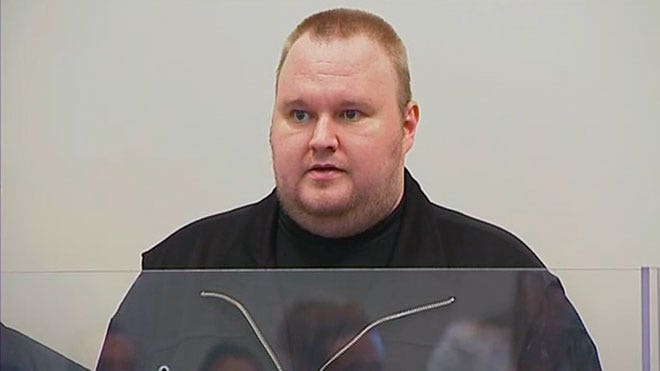
Kim Dotcom
Recently, US authorities have been trying to extradite Kim Dotcom, the founder of Megaupload, so they can try him on American soil. They have been having trouble with this. The last time anything like this happened in America, it was for the founder of NinjaVideo, a movie streaming service. The founder was sentenced to 22 months in prison. In his time as the head of NinjaVideo, he made $500,000 in revenue, which is a minute number compared to Dotcom who made close to $175 million through Megaupload. His sentencing would be much steeper.
So now that the dust has settled, it's clear to see who has really been affected by the shutdown of Megaupload. It's not the people who were uploading illegal content and getting paid for it; it's not the people who used Megaupload to watch copyrighted movies or download music illegally; its the people who used Megaupload for its intended purpose - for storing and sharing legal files. The biggest group of people who used it for this purpose was new up and coming artist and independent filmmakers. It was people who were trying to get their foot in the door in the movie and music industry. Using sites like Megaupload was great for these types of people because it allowed them to upload their content for free and allow the whole world to see it. Without Megaupload, these independent artist find it much harder to get recognized, especially since all the big movie industries and music labels own and operate most of the other ways to get noticed.
The other people that get hurt are those who used Megaupload simply to back up their data. A large number of Megaupload's users used the site for its intended purpose. Many of these people who now have no access to all of their files are really pissed off. A group of campaigners are currently trying to file a legal claim against the US Government for their seizure of Megaupload, which is a Hong Kong based company. Other's are trying to file a claim against the FBI, in hopes of getting some sort of compensation and getting their files back. The group stated, "When the United States Government shut down access to Megaupload, a multitude of innocent users who stored legitimate, non-infringing files on the cloud-storage service were left with no means to access their data." This, in my opinion, is not right.
After taking down Megaupload, the government thought that it sent a clear message to world, stating that they will not put up with piracy and copyright infringement. Although the scoreboard read 1-0 Government, it wouldn't last for long. Just hours after Megaupload was beheaded, the Hacktivist group Anonymous waged war on the government.
Anonymous Logo
For those of you who don't know, Anonymous is a group of unknown activist who coordinate protest and attacks against anti-piracy campaigns, using the Internet as their main weapon. The group is most known for their attacks against the Megaupload and Pirate Bay controversies.
After the government had shut down Megaupload, Anonymous went ahead and struck back. Within hours of Megaupload going offline, multiple government and media related websites also went down. Some of these sites include the U.S. Department of Justice (DOJ), the Federal Bureau of Investigation (FBI), the U.S. Copyright office, the Recording Industry of America, the Motion Picture Association of America (MPAA), and Universal Music, just to name a few. Any attempt at logging into any of these sites proved to be difficult. None of them worked. Anonymous' main weapon of choice was a DDoS attack, or distributed denial of service. Basically what this means is that a bunch of people simultaneouly try to login into a site. This overloads the servers and causes that site to crash. Technically, this is not hacking, since Anonymous didn't do anything more than log into the website.
If you follow any of the Anonymous fan pages on Twitter, such as @anonops, you got to see every site that got taken down. I'll admit that it was very entertaining to watch as multiple sites were taken down. Anonymous mocked these sites with little quips like, "Tango Down! Tango Down!"
Although the sites were quickly fixed and put back up, a clear message was sent and received.
Anonymous let the government know that their actions will not be taken lightly and that they are not the only people that control the internet. In my opinion, this was a victory for Anonymous and for those who are against the SOPA and PIPA bills. Anonymous spoke for us all by saying that we will not take this lying down.
Since that night, Anonymous has continued to attack certain websites, showing the government that they are still here and they are watching. Since that night, no other websites have been shut down.
So I know this is a few weeks old, but I thought I'd talk about it anyways. Last month, Megaupload, a popular file-sharing website, was shut down by the government.
Before I go into it, let me explain exactly what Megaupload is. Megaupload, founded in 2005, was the largest file sharing website on the Internet. Based out of Hong Kong, Megaupload allows users to upload files, such as videos, photos, and music, and then let other users download the files to their own computers. Originally, the site was supposed to be used for strictly legal purposes. Soon users found out they could upload anything, including copyrighted material, and it wouldn't be taken down. This helped make Megaupload the largest file sharing website.
Back to the present. In January, the government went ahead and shut Megaupload down. For a long time, the government had been looking at Megaupload for copyright infringement. With SOPA and PIPA becoming so popular, the government decided it was time to take action, so they shut it down. Here's a link to the Justice Department Indictment if you want to read it. Along with shutting it down, they also took every piece of uploaded material down. Not only did this include all of the illegal material, but also all of the regular user's data. Many people relied on this site as a backup of their files, and others even used it as their main hard drive. People lost family photo albums and their entire music libraries.
Was the government right to shut down Megaupload? Somewhat, I would say. I agree that they did have illegal material up on their website, and for that they should be in trouble, but what about all of those people who used the site the right way? Should they have really had all their data erased?
In my opinion, I believe the government had the right to shut down the website, and also the right to arrest the owners of the website. What I don't feel the government had the right to do was erase all of the data. Instead, the government should have allowed users a chance to get their files off of the website.
I know before I said that I believed the government had the right to shut it down. What I meant by that is they had the right if it was an American made website. Being made in Hong Kong, I don't believe the government had the right to do it. It's a website made in a different country, ran by a different country. It's not the United States government's place to take control of foreign made websites.
Next time, I'll be talking about Anonymous and their strike against the government's actions against Megaupload.